In her poem Five Senses, Judith Wright beautifully captures the delicate boundary between thought and speech:
“while the clear creative mind
shapes the stream of day,
and wraps it in a word
as a robe is wrapped over a body.
Yet what it translates
into the language of speech
is the thing that was already there:
the shape that was already known”
So much of our lived experience exists long before language ever arrives. We navigate a world rich in feelings we can intimately sense but can’t quite name. There are quiet moments, heavy emotions, and sudden realizations that we only truly understand through an image, a song, a subtle gesture, a passing memory, or simply by sitting silently with them. Language tries its best to clothe these moments, but the essence was already there, felt in full before a single syllable was formed.
Consider how powerfully our environment speaks to us without words. A sudden shift in temperature or a specific kind of rainy afternoon can evoke deeply familiar emotions that evade verbal definition. Weather actively changes our brain chemistry—the biting cold of late autumn can carry an unnamable melancholy, while direct sunlight can flood us with an instant burst of warmth and serotonin.
Similarly, music accesses parts of us that speech cannot reach. A song might release dopamine or unlock a long-faded memory where the exact details are forgotten, yet the raw emotional weight remains entirely intact. Accessing these subterranean memories and feelings through vocabulary alone is often impossible. Instead, their true reflection and expression emerge through actions, the choice of colors, the creation of imagery, or even how we curate the physical spaces around us.
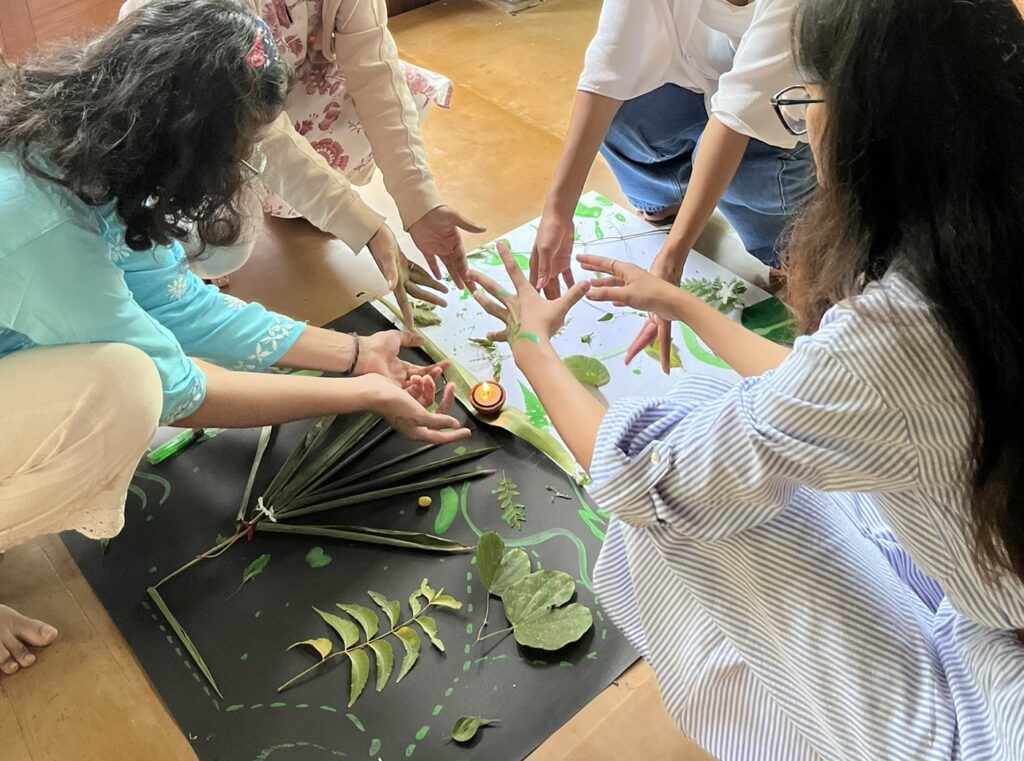
Speech is, after all, merely one medium of expression, just as hearing is only one of our five senses. Humans are equipped to feel and express themselves through countless non-verbal channels, yet our inability to articulate every internal state into neat sentences is often deeply frustrating.
Words, as vital and beautiful as they are, remain strictly finite in scope. Emotions, by contrast, are infinite. When language falls short, we shouldn’t feel trapped by silence; rather, we should be afforded the space, freedom, and mediums to find true expression in different things—be it art, sound, movement, or quiet presence.